
November 10, 2025
Online Zoloft Prescription Help for Busy Professionals Who Are Tired of Waiting Rooms
📌 Key Takeaways
Staying on top of mental health care shouldn’t require sacrificing half your workday to a waiting room.
- Logistics, Not Commitment, Is Usually the Problem: Missed appointments and lapsed refills rarely reflect a lack of care—they reflect a system that wasn’t designed around a packed professional schedule.
- “Online” Means Streamlined, Not Shortcut: Clinician-guided online Zoloft help follows the same safety standards as in-person care; what changes is where the administrative steps happen.
- Fit Depends on Stability, Not Convenience Alone: Online care works best when symptoms are relatively stable and the main barrier is logistics—crisis situations still require in-person or emergency resources.
- Time Savings and Emotional Relief Go Together: Moving from “background dread” about refills to a predictable routine creates calm confidence that treatment won’t derail work or life.
- Protecting Your Schedule Isn’t Taking Mental Health Lightly: Wanting efficient care reflects a commitment to consistency, not a willingness to cut corners.
Prepared + practical = steadier care without the calendar chaos.
Busy professionals in the United States managing Zoloft prescriptions will find a clear framework here, preparing them for the detailed overview of clinician-guided online options that follows.
This article shares general information about getting help with a Zoloft prescription and the time pressures many busy professionals face. It cannot tell you whether this approach is right for your specific situation. Decisions about medication and treatment should always be made with a qualified healthcare professional who knows your medical history and the options available in your area.
When Every Zoloft Appointment Means Losing Hours to the Waiting Room
Another Tuesday afternoon. Another waiting room.
You took two hours off work, drove across town, and now you’re sitting in a chair watching the minutes tick by. The appointment was scheduled for 2:30. It’s now 3:15, and you still haven’t been called back. When you finally see the clinician, the conversation lasts maybe fifteen minutes. Then you’re back in traffic, replaying the mental math of how much work you’ll need to catch up on tonight.
This scenario plays out constantly for busy professionals managing their mental health with Zoloft. The frustration builds. So does the guilt about missing meetings, the awkward explanations to coworkers, and the quiet worry about what happens when refills run low and the calendar simply won’t cooperate.
There has to be a better way than losing half a day for a short check-in.
How Waiting Rooms Wear Down Busy Professionals Over Time
When getting help feels like a logistical marathon, something eventually gives.
A report from the National Alliance on Mental Illness found that many adults in the United States who live with mental health conditions do not receive the care they need. Structural barriers play a major role: limited provider availability, long wait times for appointments, and the sheer difficulty of fitting visits into everyday life.
The pattern becomes familiar. One missed appointment leads to a scramble for refills. That leads to rationing doses. Symptoms creep back at the worst possible moment.
Beyond the practical disruptions, there’s an emotional toll. Many professionals describe the sense that their treatment plan is held together with sticky notes and memory rather than an actual system. The visible nature of waiting rooms adds another layer. Sitting in a crowded lobby during work hours can feel exposing, even when no one is paying attention.
None of this means someone is disorganized or doesn’t take mental health seriously. It means the traditional process wasn’t designed around a packed schedule.
What Clinician-Guided Online Zoloft Prescription Help Actually Changes (and What It Doesn’t)
The phrase “online prescription help” can sound vague or even suspicious. Here’s what it actually means in a clinician-guided context.
Think of it like booking a flight online instead of standing in line at the airport. The destination is the same. The rules still apply. But much of the friction disappears.
Zoloft (sertraline) is a selective serotonin reuptake inhibitor approved in the United States for conditions including major depressive disorder, certain anxiety disorders, and obsessive-compulsive disorder. The U.S. Food and Drug Administration provides full prescribing information, including risks and side effects.
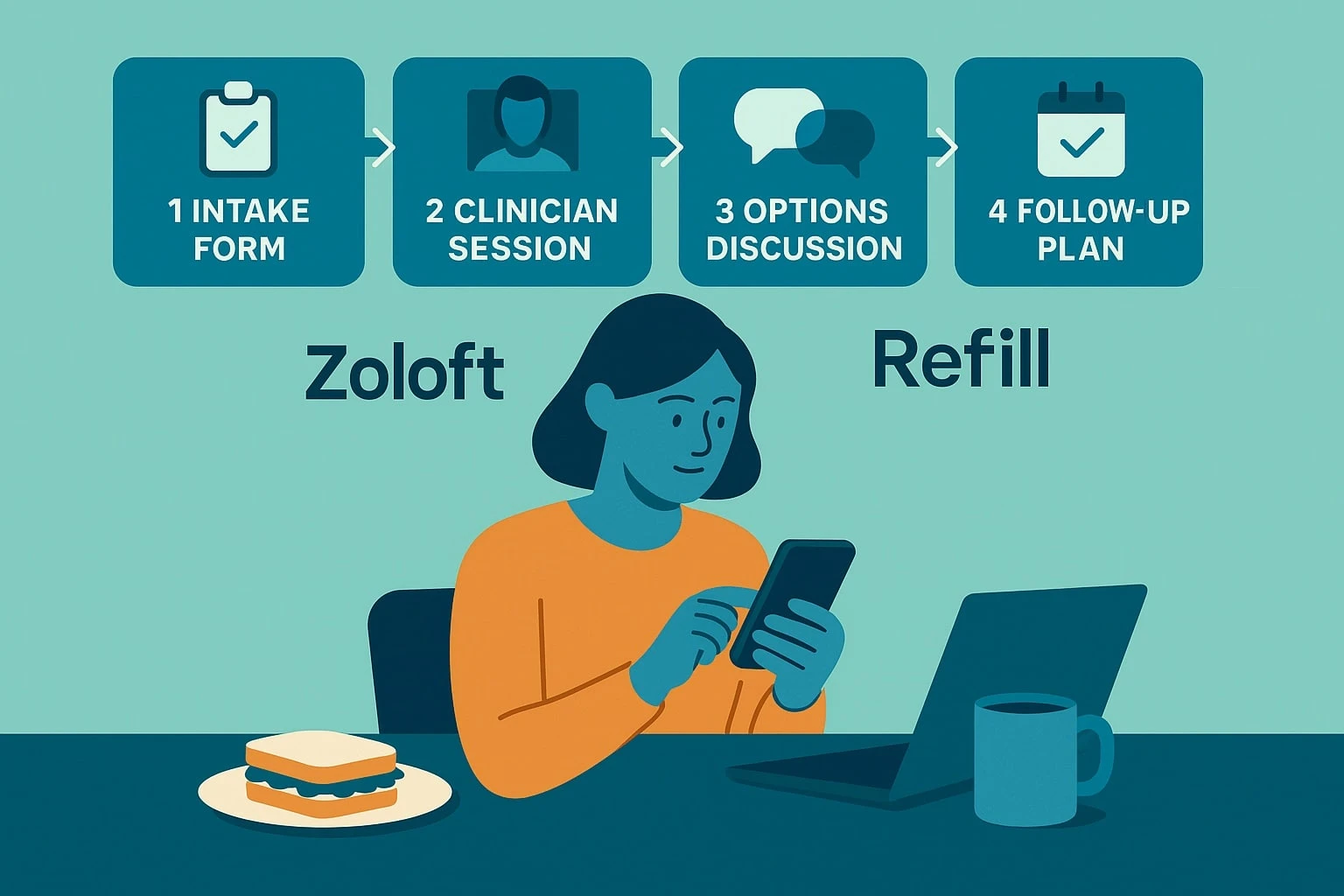
In responsible telehealth settings, a safe online visit typically involves four steps. First, you complete a secure intake form covering symptoms, history, current medications, and goals. Second, you meet with a licensed clinician by video or phone at a scheduled time. Third, you discuss options together and the clinician recommends next steps based on your situation. Fourth, you leave with a clear follow-up plan, including what to watch for and when to check in again.
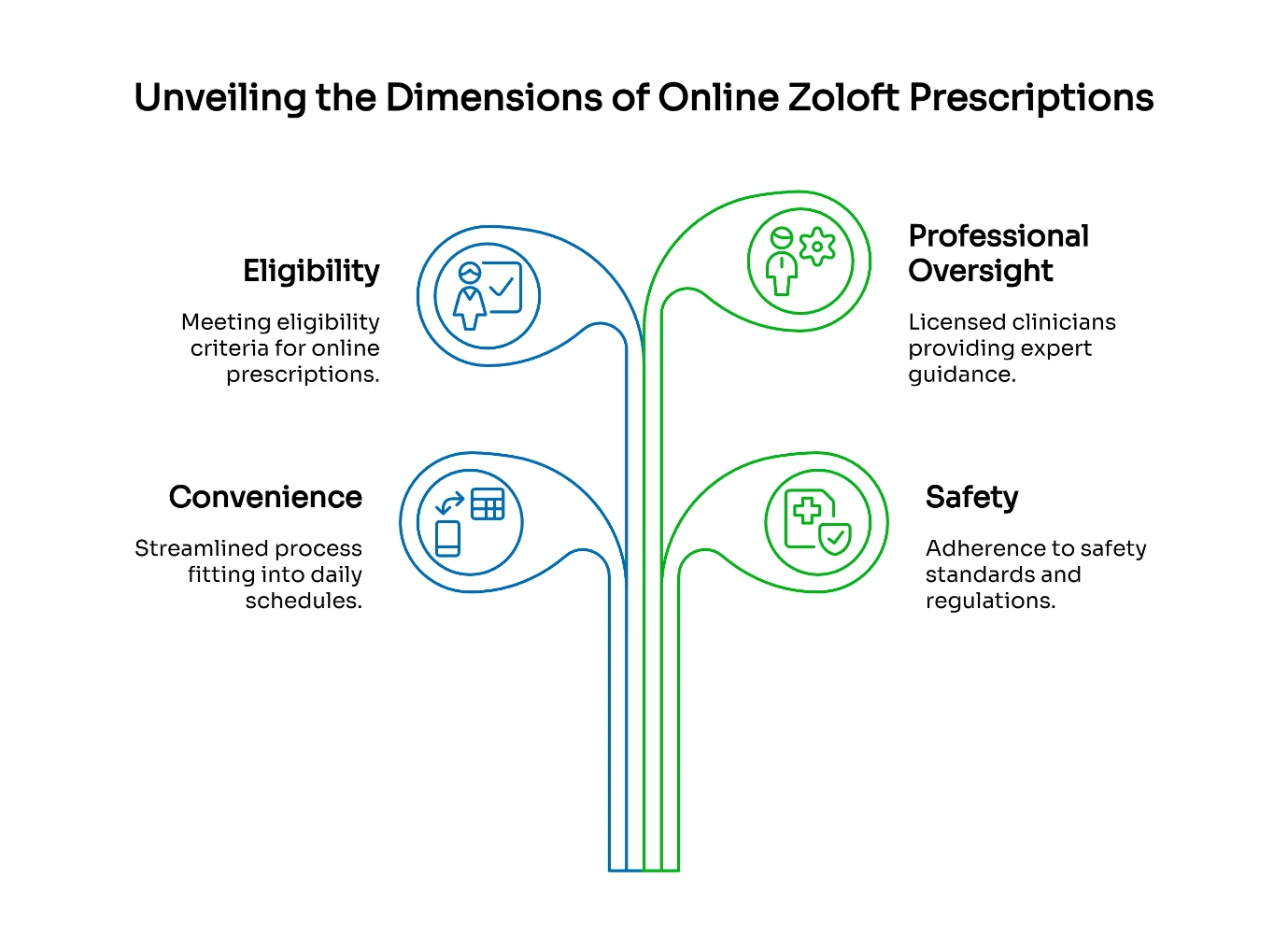
This isn’t about cutting corners. Eligibility requirements, safety screenings, and professional oversight remain central. What changes is where the logistics happen. Instead of burning vacation hours in a waiting room, many steps can fit into a lunch break or a quiet evening at home.
For a complete walkthrough of how this process works, see the full guide to getting a Zoloft prescription online.
Protecting Your Time and Privacy Without Cutting Corners on Safety
Wanting a more efficient process doesn’t mean taking mental health lightly. If anything, it reflects a commitment to staying consistent with treatment rather than letting logistics derail progress.
Clinician-guided online options can reduce both time stress and stigma-related worry. Fewer visible waiting room visits mean fewer awkward schedule gaps to explain. Shorter, better-timed steps mean treatment planning doesn’t have to compete with quarterly reviews and client deadlines.
The American Psychiatric Association’s telepsychiatry guidelines emphasize that online care should meet the same quality and safety expectations as in-person visits. Legitimate services maintain the same safeguards: proper screening, licensed oversight, secure technology, and clear emergency plans.
You deserve serious, clinician-guided care that also respects your schedule and privacy.
Is Online Zoloft Prescription Help a Good Fit for You?
Online care works well for some people and less well for others. A few honest indicators can help clarify fit.
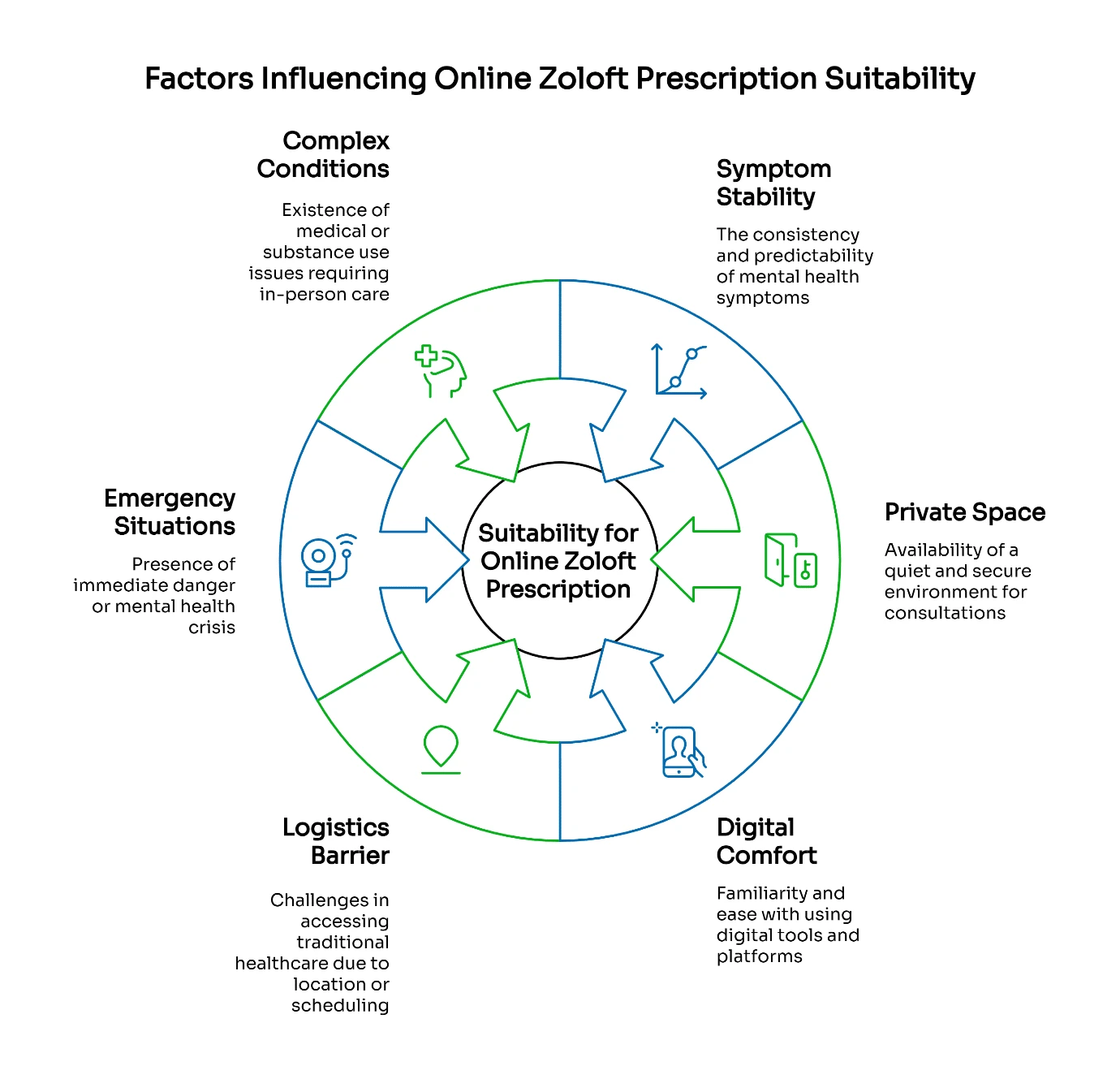
It may be a good fit when symptoms are significant but relatively stable, with no immediate safety crisis. It tends to work well for people who have a private space for video or phone visits and basic comfort with digital tools. The approach shines when the main barrier has been logistics rather than the complexity of symptoms.
It may be too limited on its own when there are current thoughts of self-harm or harming others. Symptoms such as hallucinations, rapidly shifting mood, or recent hospitalization typically require closer, local coordination. Complex medical conditions or substance use may also call for in-person evaluation.
Anyone in immediate danger or experiencing a mental health crisis should contact local emergency services or the 988 Suicide & Crisis Lifeline. Online Zoloft prescription help is not an emergency resource and is not meant to replace urgent care.
Taking time to think through these questions before deciding is completely reasonable.
A Week-in-the-Life Example: Fitting Zoloft Help Around a Packed Schedule
Consider a hypothetical example to make this concrete.
A marketing director notices on Sunday evening that a Zoloft refill is due in two weeks. In a traditional scenario, this would trigger a scramble to find an open appointment slot, negotiate time off, and hope the timing works out before the prescription lapses.
With clinician-guided online help, the week looks different. Monday during lunch, she completes a secure health questionnaire on her phone. Tuesday evening after dinner, she receives a follow-up message from the clinical team with a few clarifying questions. By Wednesday afternoon, the clinician has reviewed everything, confirmed eligibility, and sent the prescription to her local pickup location.
No traffic. No waiting room. No explaining to her boss why she needs to leave early again.
The emotional shift matters as much as the time savings. Instead of background dread about whether everything will come together, there’s a calmer sense that treatment logistics are handled. That’s the difference between crisis mode and having a co-pilot for mental health.
Taking a Next Step Without Losing a Whole Afternoon
If this approach sounds worth exploring, the next step doesn’t have to be dramatic.
Start by listing your personal non-negotiables. Note constraints such as “no more than thirty minutes away from the desk at a time” or “mornings only.” Use that list when evaluating any telehealth or in-person option.
Calling a team like Refill Genie to talk through whether online Zoloft prescription help fits your situation is a low-pressure starting point. Visiting in person to discuss a refill plan that respects your calendar is another option. Simply learning more and asking questions counts as progress.
You can take your mental health seriously and still protect a busy workday. Those two goals don’t have to compete.
Our Editorial Process
Our team reviews every guide for clarity, accuracy, and alignment with current clinical guidance before publication. We regularly update content when recommendations or best practices evolve.
About the Refill Genie Insights Team
The Refill Genie Insights Team is our dedicated engine for synthesizing complex topics into clear, helpful guides. While our content is thoroughly reviewed for clarity and accuracy, it is for informational purposes and should not replace professional advice.