
January 13, 2026
Running Out of Meds on Vacation: A Traveler's Guide to Gap Prescriptions
📌 Key Takeaways
Running out of medication while traveling is a solvable logistics problem when you have the right information ready and know which refill path to choose first.
- Photo Trumps Everything: A prescription bottle photo contains all verification details clinicians need, making it the single fastest way to speed approval.
- Rank Options by Speed: Home pharmacy transfers work fastest when refills remain; prescriber contact works when they’re responsive; online reviews fill gaps when neither responds quickly.
- Safety Checks Come First: Counting remaining doses and screening for withdrawal symptoms separates urgent medical needs from simple refill logistics.
- International Rules Vary Widely: CDC guidance recommends carry-on packing, original containers, and extra supply because some medications face restrictions or prohibitions abroad.
- Legitimacy Verification Protects Privacy: NABP Digital Pharmacy Accreditation and LegitScript certification status confirm whether online services meet pharmacy law and practice standards.
Prepared travelers prevent scrambles; unprepared travelers manage crises.
Busy professionals and frequent travelers managing maintenance medications will find immediate action steps here, preparing them for the detailed refill options and prevention strategies that follow.
You’re away from home, you check the bottle, and you realize you’re 1–2 days from running out. The panic is real, but this situation happens more often than you think. You haven’t done anything wrong—you just need a clear plan to fix it quickly. Here’s what to do in the next 10 minutes.
Emergency Medication Refill is the provision of immediate, short-term prescription refills for maintenance medications to prevent treatment gaps. Think of it as a spare tire for your health; it’s not meant to replace the wheel forever, but it keeps you moving safely until you get to the shop. Imagine the relief of knowing that a lost bottle of pills won’t result in a week of brain zaps or anxiety—you have a backup plan in your pocket. You should use this service to bridge the gap between doctor’s appointments or during unexpected travel.
Do this first: a 2-minute safety + supply check
Regain control immediately.
1. Confirm the runway
Count how many pills remain and confirm when you took your last dose. If you’re unsure about the count, take a conservative approach—assume you have fewer doses than you think until you can verify the actual number with your pharmacy records or prescription label.
2. Handle missed doses safely
Check your prescription label for missed-dose guidance. Your specific medication may have particular instructions that differ from general principles. When in doubt, contact a pharmacist or clinician rather than guessing—medication-specific guidance matters. MedlinePlus provides drug information resources that can help you understand medication directions.
3. Screen for red flags
Watch for symptoms that move this beyond a simple refill problem. Chest pain, fainting, difficulty breathing, signs of severe allergic reaction, or symptoms that suggest withdrawal mean you need urgent care or an emergency room right now. Some medications carry higher risks when suddenly interrupted, making professional evaluation critical rather than optional.
Your fastest refill options while traveling (ranked by speed)
Choose the right lane based on what’s most likely to work today.
Option 1: Ask your home pharmacy about a transfer or emergency supply
This works best if you have refills remaining on file. Call your home pharmacy and ask if they can transfer the prescription to a pharmacy near your current location. Many pharmacies can process these transfers, with some national chains able to access records across their locations.
For most maintenance medications, transfers happen relatively smoothly. However, some medications face tighter restrictions. Federal regulations address specific transfer rules for controlled substances, which means you may encounter additional verification requirements or limitations for certain prescriptions. When a medication falls into a restricted category, expect the process to take longer and require more documentation.
Option 2: Message/call your prescriber’s office
If your doctor’s office has a patient portal or after-hours messaging system, send a quick note explaining your situation. Include your current location and the pharmacy where you’d like the prescription sent. This option is reliable when they can respond quickly, though it may be slow during travel windows or weekends.
This approach works best when your refills are exhausted, your prescription has expired, or the pharmacy cannot execute a transfer in your timeline.
Option 3: Use an online gap refill review service (e.g., Refill Genie)
When you can’t reach your doctor in time and need a clinician review for an e-prescription to a local pharmacy, online services fill this exact gap. The workflow is straightforward: complete a short intake form, a licensed clinician reviews your information, and if appropriate, an electronic prescription gets sent to your chosen pharmacy.
Refill Genie utilizes an asynchronous telehealth process (typically involving digital forms or messaging) where clinicians review requests and transmit refills for existing maintenance medications. The service explicitly states it refills existing medications only—not for starting new prescriptions or diagnosing acute conditions.
If you can’t reach your doctor in time, start an online refill request with Refill Genie.
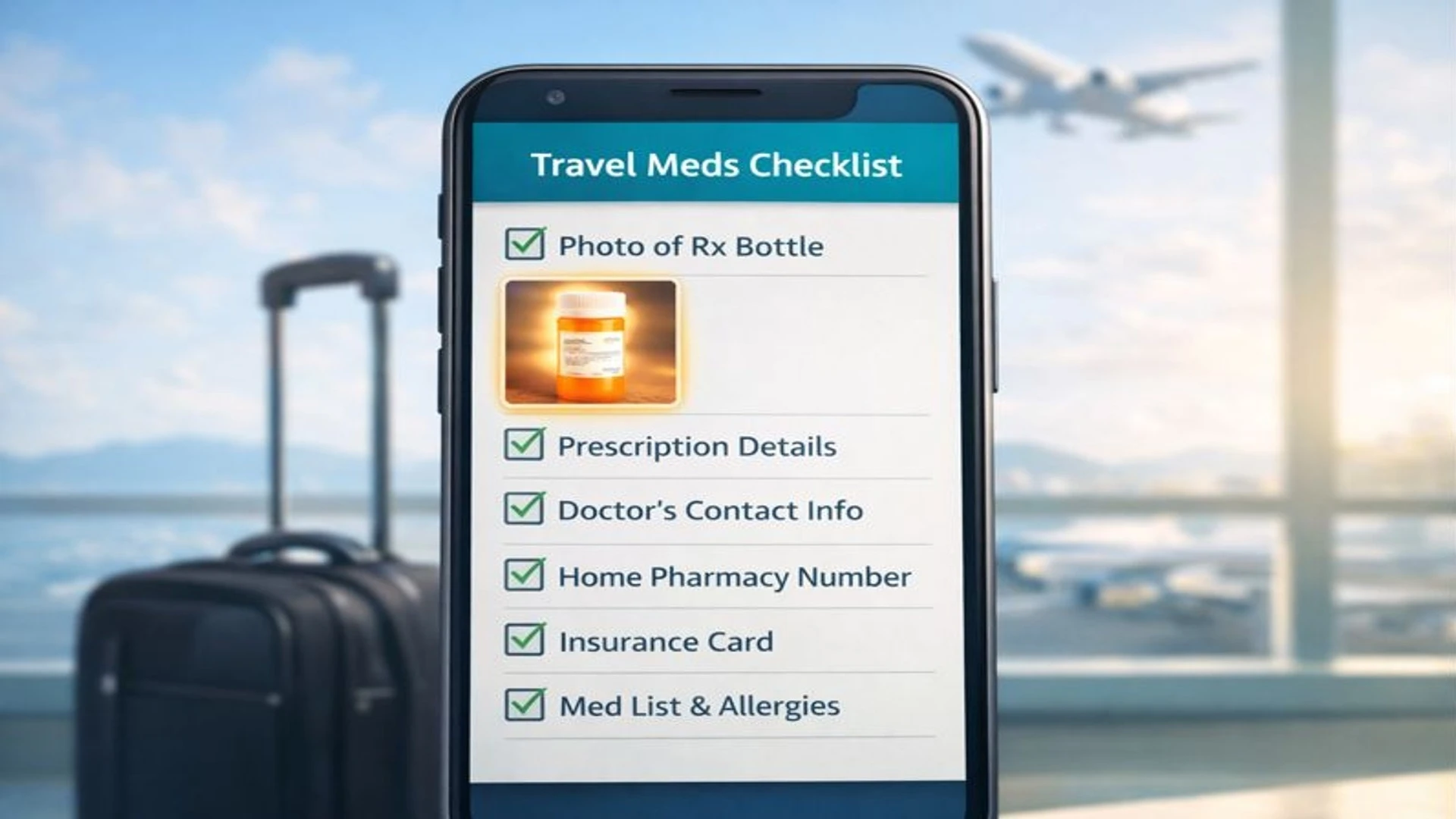
Traveler’s Meds Checklist (Save this)
Prep like a pro—this is the time-saver.
This is a logistics problem; the fastest fix is having verification-ready info in one place. Save these details in your phone before your next trip:
☐ Photo of Rx bottle (front label) ☐ Your pharmacy phone number (home pharmacy) + preferred pickup pharmacy ☐ Prescriber/clinic name and contact (if available) ☐ Medication name, dose, and how you take it ☐ Any allergies + key medical conditions ☐ Your location/state (where you are traveling)
Having a photo of your prescription bottle significantly speeds up the verification process. The label contains everything a clinician needs to confirm your medication history: the drug name, strength, prescriber information, and pharmacy details. It’s the single most valuable piece of information you can provide.
If the bottle is lost, you’ll need a backup plan. Contact your home pharmacy for your prescription history, or check your insurance portal if you have coverage. Your pharmacist can help guide you through alternative verification methods if the original bottle isn’t available.
What to expect at pickup (and how to avoid surprises)
No surprises at the counter.
The pharmacy will likely request your ID and confirm your details before releasing the medication. This is standard protocol, not a sign that something’s wrong. Costs vary at the pharmacy depending on your insurance status and the medication itself. Keep in mind that the clinician review fee (if using an online service like Refill Genie) is separate from what the pharmacy charges at pickup.
Consider comparing cash prices at different pharmacies if you’re uninsured or between coverage. Some medications cost significantly less when purchased without insurance, and prescription discount programs may be available to help reduce out-of-pocket expenses.
Even with an e-prescription already sent, the actual fill time depends on pharmacy workload, whether they have the medication in stock, and any additional verification steps they need to complete.
Risks & mitigations (don’t let a small problem become a big one)
Safety first.
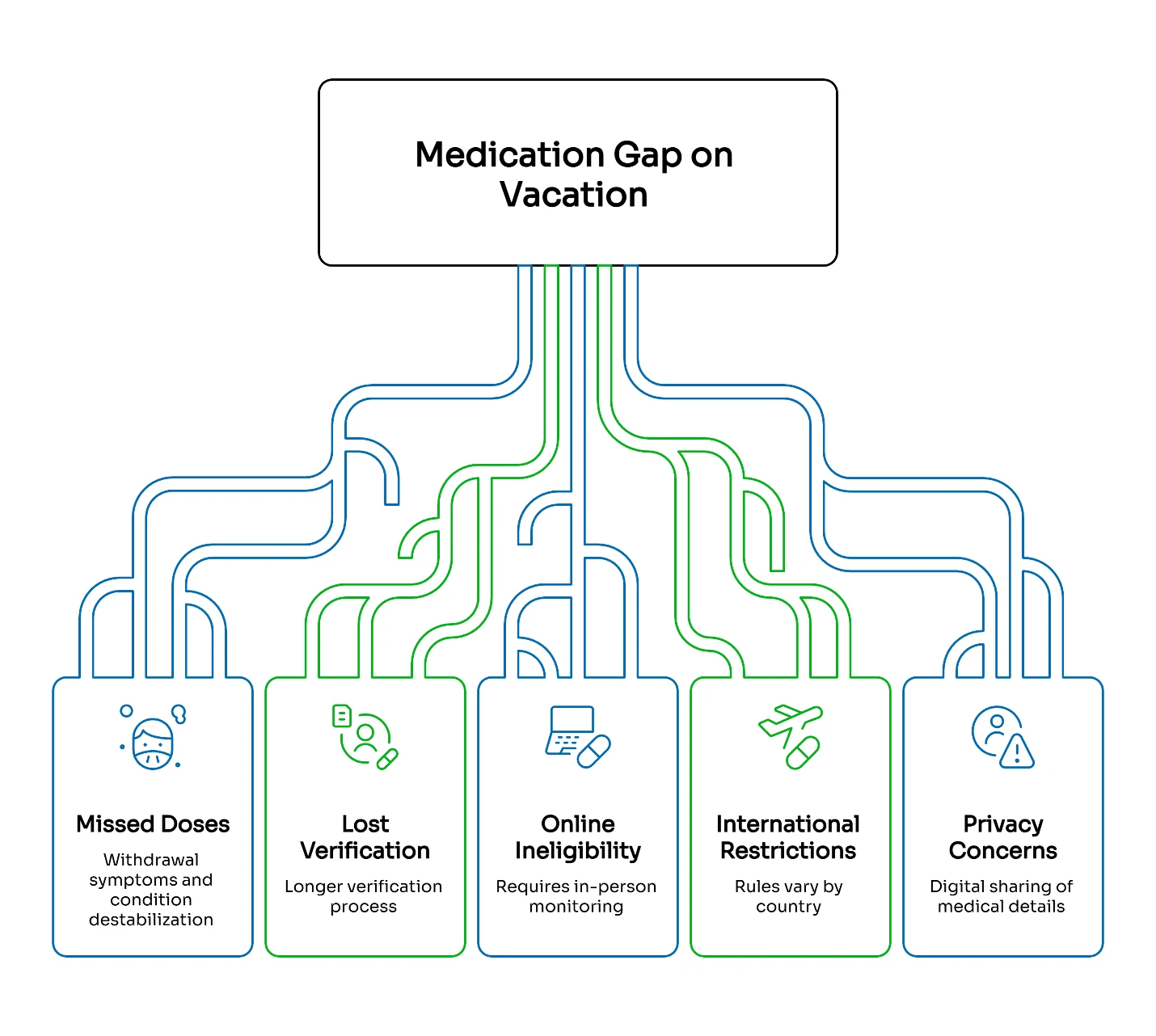
Risk: Missing doses or experiencing symptoms.
Missing a dose of certain medications can trigger withdrawal symptoms or destabilize your condition. Contact a clinician or pharmacist for guidance specific to your medication. If symptoms feel severe—unusual heart rate, confusion, tremors—seek urgent care immediately rather than waiting.
Risk: Lost bottle with no verification details.
Without your prescription information, the verification process takes longer. Request your prescription history from your home pharmacy as soon as possible. Your pharmacist can help you identify alternative verification methods. Never use someone else’s medication as a substitute, even if it seems like the same drug. CDC medication safety guidance reinforces this principle: taking another person’s prescription can be dangerous due to differences in dose, formulation, drug interactions, and individual medical conditions.
Risk: Your medication isn’t eligible for an online refill.
Some medications require in-person monitoring or fall into categories that online services cannot legally refill. If your medication isn’t eligible, contact your prescriber directly or visit a local urgent care or emergency room depending on the severity of your situation.
Risk: Traveling internationally with medications that are restricted or prohibited.
Medication rules vary significantly by country. Before international travel, research your destination’s regulations and carry medications in their original labeled containers. CDC travel guidance recommends bringing enough medication for your entire trip plus extra, keeping medicines in original containers, and packing them in your carry-on in case checked luggage is lost. The U.S. Department of State also advises checking destination health and medication considerations before departure.
Risk: Privacy concerns when sharing medical details digitally.
When using any online health service, review their privacy policy to understand how your information will be used and protected. HHS HIPAA resources provide information about health information privacy protections in the U.S. Refill Genie publishes a privacy policy describing their data collection and use practices.
When an online gap refill isn’t the right fit
Know the boundaries.
Online prescription refill services handle existing maintenance medications, not new prescriptions or dose changes. If your doctor recently adjusted your dosage or started you on a new treatment, you’ll need to work directly with your prescriber.
Controlled substances, certain high-risk medications requiring regular monitoring, and drugs that need blood level checks typically cannot be refilled through online gap services. This isn’t a limitation of the technology—it’s a safety boundary built into the system to protect you. Refill Genie’s Frequently Asked Questions or policy pages generally outline these exclusions for controlled substances and medications requiring close monitoring.
If you’re experiencing symptoms that suggest a medical emergency rather than a simple refill gap, seek urgent care. Severe chest pain, difficulty breathing, extreme confusion, or signs of withdrawal need immediate medical attention, not a prescription refill service.
For questions about whether your specific medication qualifies, check the FAQs or reach out to our medical team for clarification.
Verifying legitimacy when using online services
Protect yourself by checking credentials before sharing health information.
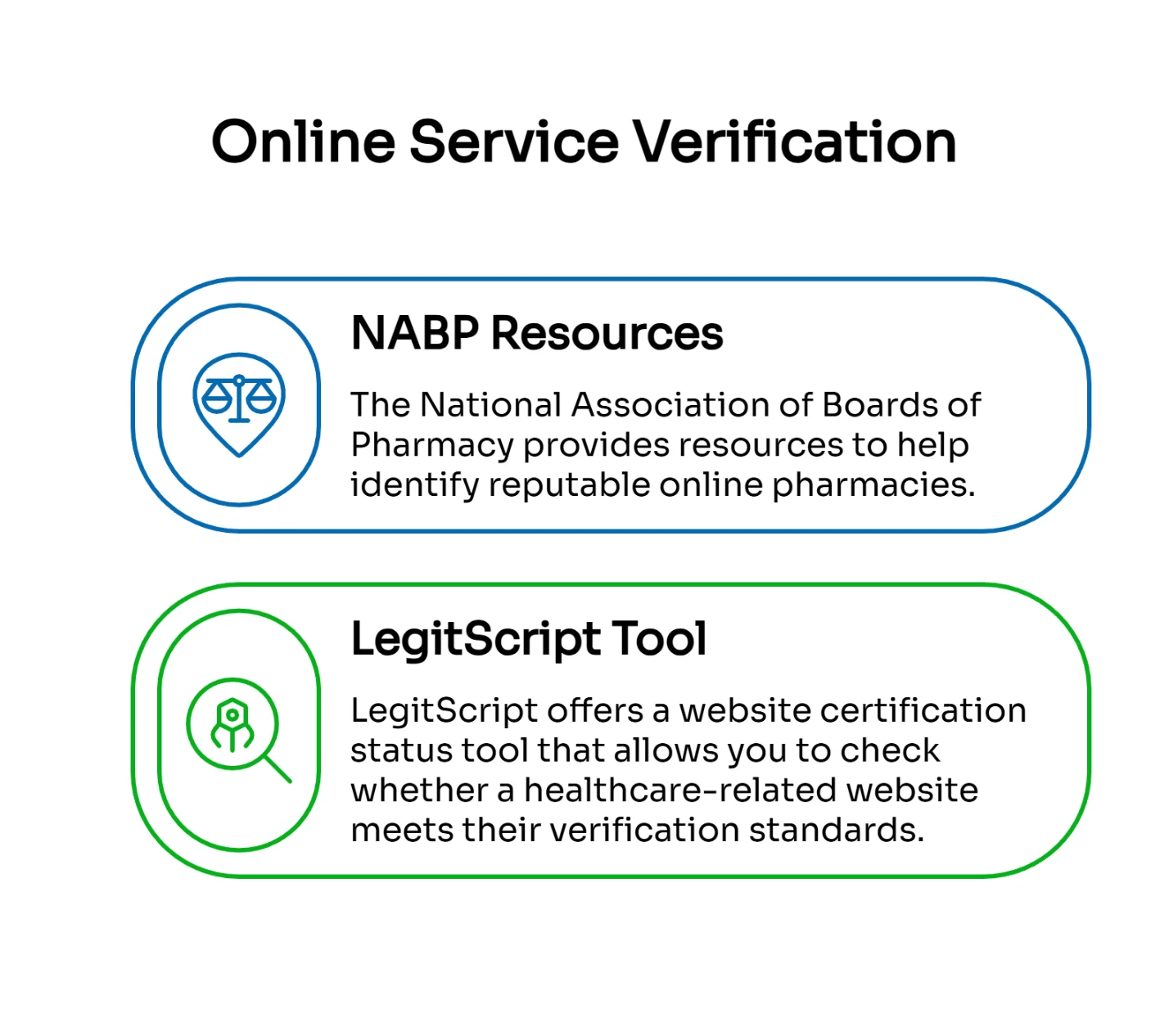
When considering any online medication service, a few quick verification steps can prevent problems. The National Association of Boards of Pharmacy (NABP) provides resources to help identify reputable online pharmacies, primarily through their Digital Pharmacy Accreditation (formerly VIPPS) and the pharmacy Verified program. These accreditations ensure the site complies with pharmacy laws and practice standards.
LegitScript offers a website certification status tool that allows you to check whether a healthcare-related website meets their verification standards. These independent verification resources help you make informed decisions about which services to trust with your health information.
Prevent the scramble next trip
Future-proof your travel routine.
Build a “meds admin kit” in your phone. Take photos of all your prescription bottles, save your prescriber’s contact information, and store your home and preferred pharmacy numbers. Having this information readily available turns a potential crisis into a simple administrative task.
Set calendar reminders based on your travel dates. If you’re traveling for more than a few days, check your medication supply at least a week before departure. This gives you time to request refills through your regular channels rather than scrambling for emergency options.
For international travel, follow CDC recommendations: pack medications in your carry-on luggage, bring enough for your entire trip plus extra days, and keep everything in original labeled containers. Some medications may be prohibited or restricted at your destination, so research these rules well before your departure date.
Talk to your clinician about travel timing when you’re planning longer trips. Some prescribers will write prescriptions with extra refills or authorize early fills if you explain your travel schedule. Refill earlier than you think you’ll need—running out on day 28 of a 30-day supply while traveling is entirely preventable with a bit of advance planning.
For more comprehensive guidance on managing medications while away from home, read our detailed guide on how to refill prescriptions while away from home.
Frequently Asked Questions
Can a refill be obtained while traveling in a different state?
Yes, in most cases. Online refill services and pharmacy transfers can often work across state lines for maintenance medications. However, outcomes depend on the specific medication, whether you have active refills, and applicable regulations. Controlled substances may face additional restrictions under federal transfer rules.
What information makes a same-day refill more likely?
Having verification-ready details significantly speeds the process. A photo of your labeled prescription bottle is the most valuable item, followed by prescriber information and your preferred pickup pharmacy’s contact details. The more complete your information, the less back-and-forth is needed.
Is it safe to “stretch” doses to make medication last longer?
No. Changing your dose without professional guidance can be unsafe and may cause serious complications. Follow your prescription label directions exactly, and contact a pharmacist or clinician if you’re concerned about running out. The safest approach is always following medical guidance rather than improvising.
What if the medication is lost during international travel?
Contact your prescriber immediately and explain the situation. International medication rules vary significantly by country, and some medications may be restricted or prohibited at your destination. The CDC travel guidance emphasizes keeping medications in original labeled containers and packing them in carry-on luggage to prevent this situation.
How can privacy be evaluated before submitting health information online?
Review the service’s privacy policy and look for clear explanations of how your information will be used, stored, and protected. Compare their practices against HIPAA privacy standards to ensure they meet expectations for health information security.
You have options, and you’re not alone
Losing medication on vacation is a common logistical error, not a catastrophe. The fastest path depends on your specific situation: if you have refills remaining, your home pharmacy can often transfer them quickly. If your doctor is available and responsive, a direct message may be fastest. When neither option works on your timeline, online gap refill services exist precisely for this scenario.
The system isn’t perfect, but it’s designed to help you maintain continuity in your treatment even when life doesn’t go according to plan. Understanding your options means you can make the choice that gets you back on track with the least disruption.
Ready for a backup plan? Submit your refill request online and have a clinician review it quickly.
This article is for informational purposes only and is not medical advice. Medication needs are personal and depend on your health history. For medication-specific guidance (including missed doses), contact a licensed clinician or pharmacist. If you think you may be experiencing a medical emergency, call 911 or go to the nearest emergency room.
Our Editorial Process
Our expert team uses AI tools to help organize and structure our initial drafts. Every piece is then extensively rewritten, fact-checked, and enriched with first-hand insights and experiences by expert humans on our Insights Team to ensure accuracy and clarity.
About the Refill Genie Insights Team
The Refill Genie Insights Team is our dedicated engine for synthesizing complex topics into clear, helpful guides. While our content is thoroughly reviewed for clarity and accuracy, it is for informational purposes and should not replace professional advice.